C3X is a great event to attend if you are looking to engage with the decision-makers and
thought leaders responsible for all aspects of the student and facility experience on campus.
The relationships and experiences obtained from spending time on campus are the cornerstone of higher education. The people that attend C3X nurture the world's brightest minds and future leaders. - Jordan Parsons, CEO, Benbria
October 31-Nov. 3, 2027
National Harbor, MD
Important Notice: NACAS has been alerted to unauthorized third-party companies offering hotel reservations for C3X. These companies are not affiliated with NACAS. Official hotel details and booking links will only be shared directly with verified conference registrants via email.
Select an option below:
- C3X Home
- C3X Testimonials
- Business Case for Attending
- Registration
- Expo Hall & Sponsorship
- 2026 Agenda
The 2026 C3X Call for Programs is now closed.
Interested in sharing your expertise with the NACAS community? Consider presenting a webinar through the NACAS Online Institute. Institutional Members can contact Raj White, Sr. Director of Education, and Business Partners can contact Laura Gaenzle for more information.
The 2027 C3X Call for Programs will begin in early 2027.

Download the 2026 C3X printable conference schedule.

The conference agenda on this site is up to date as of Friday, September 25, 2026 and is subject to change. Please check the conference app for the most up to date conference schedule.
Saturday, September 26, 2026
8:00am - 5:00pm
NACAS Staff Office
8:30am - 3:30pm
Campus Tours
Campus tours of University of Illinois Chicago and Northwestern University.
10:00am - 11:00am
C3X Committee Kick Off Meeting
Invite Only
12:00pm - 1:45pm
NACAS Foundation Board Meeting & Lunch
Invite Only
2:00pm - 4:00pm
Registration
2:00pm - 3:30pm
NACAS Board Meeting & Lunch with Regional Presidents
Invite Only
4:00pm - 5:15pm
Regional Board Meetings
Invite Only
5:30pm - 8:30pm
Regional Board Dinners
Invite Only
5:30pm - 8:30pm
National and Foundation Board Dinners
Invite Only
Sunday, September 27, 2026
6:00am - 6:00pm
NACAS Staff Office
6:00am - 6:00pm
Sensory Overload Room
8:00am - 5:00pm
Expo Hall Setup
7:30am - 4:00pm
Registration
8:30am - 11:30am
LTM - Breakfast & Meeting
Invite Only
9:00am – 9:45am
Sponsored Workshop: The Human Edge in a Technology-Driven World.
Bear River Associates
9:00am – 9:45am
Sponsored Workshop: How to Elevate Your Dining Experience Through Robot Delivery
Robot.com
More than 60 campuses lost their delivery provider this year, which leaves dining leaders asking whether robot delivery is still worth betting on. Drawing on seven years of campus operations across 50 campuses, 150 restaurants, and 350,000 deliveries, Robot.com shows what a successful program looks like: driving student adoption, marketing delivery as a campus program, running it without surprises, and preparing for what's next, from delivery robots to humanoids.
Key takeaways:
1. Adoption follows convenience: their app, their hours, their restaurants.
2. Market it like a program: launch at move-in, show it on the tour.
3. Run it without surprises: team on the ground, guarantees in writing, pay per order.
4. Stay ahead: start with delivery, be ready for what's next.
Speaker:
Devon Lui, Director of Business Development, Robot.com
9:55am - 10:40am
Sponsored Workshop: Cutting Through the Chaos: Tips to Effectively Communicate with Today’s Students
Sodexo Campus
Students’ social media feeds are chaos. From monkeys to mascara to matcha, they live in "reel" time, with attention spans that are only as long as it takes to scroll. And they love it that way—it’s how they’re used to gathering and processing information. But this “feed effect” that shapes students’ perspectives, habits, and expectations means traditional modes of communication can prove frustrating and ineffective. Colleges must evolve and adapt by identifying ways to communicate with Gen Z, and soon their counterparts in Gen Alpha, in ways that will resonate.
Offering campus experiences that engage students and make them want to participate is critical, but it’s only one part of the puzzle. Fun events, cutting-edge technology, optimal convenience, and delicious on-trend dining options are only valuable if students actually partake in them. That’s where a modern communication strategy comes in. Colleges must find ways to effectively compete for students’ attention. Given that 46% of consumers say content originality is what makes their favorite brands stand out on social media, fresh ideas are key. Colleges must rethink their communications approach by meeting students where they are, prioritizing authenticity, and creating strategic content that gets students to act.
In this session, we’ll explore how to leverage social media to communicate in an authentic way that improves student participation in campus culture, as well as opportunities to pair that with an end-to-end consumer experience on campus that keeps students engaged.
Sodexo combines social media management, influencer marketing, and texting strategies with technology that promotes connection and prioritizes what matters most to students. Cutting-edge solutions like frictionless shopping, smart checkout, robotics, automated retail, and AI-enhanced data analytics create a consumer experience that’s convenient and enjoyable. Pairing an impactful communication strategy with technology built for students’ lives yields a holistic approach that effectively meets students’ expectations and creates positive, memorable campus experiences.
Join us to learn how you can redefine what student engagement looks like for the next generation and discover how you can apply these lessons on your own campus to build strong, meaningful connections that will help your students thrive. We hope you will come away with ideas for collaboration on campus and the confidence in knowing that you don’t have to navigate these challenges alone. Adapting to the ever-changing student landscape by bringing innovation through partnerships is the key to ensuring the long-term success of your students and your institution.
Speakers:
Katie Bragaw, Senior Communications Manager, Sodexo
AJ Francavilla, Vice President Client Experience & Innovation, Sodexo
9:55am - 10:40am
Sponsored Workshop: Building the Plant-Rich Menu: A Hands-On Menu Audit Workshop
Plant Rich
This interactive workshop gives campus dining and auxiliary leaders a practical, hands-on introduction to plant-rich menu development & culinary behavioral science nudges to increase plant uptake. Participants will learn Greener by Default's menu audit framework directly, then apply it in small groups to real sample menus (large scale cafeteria and retail/concessions formats representative of different campus sizes). Rather than a lecture on why plant-rich dining matters, this session focuses on how: identifying opportunities in an existing menu, applying practical culinary strategies, and reimagining stations & dishes so plant-forward options are the easiest & most appealing options — all while preserving full freedom of choice.
A Few Takeaways from Session:
- A repeatable framework for auditing any menu for plant-rich opportunities, regardless of institution size or dining format
- Hands-on practice applying that framework to sample menus in small groups
- Practical culinary techniques for building satisfying, craveable plant-forward dishes without "substitution-only" thinking
- A clear sense of how to evaluate menus from both a culinary and an operational leadership perspective
Speakers:
Shabnam Islam, Academic Director, Greener By Default
Kent Buell, Culinary Director, Greener By Default
10:00am - 10:45am
Volunteer Orientation
10:50am - 11:35am
Sponsored Workshop: Beyond the Transaction: How Kentucky Built a Partnership to Advance the Commonwealth
Chartwells Higher Education
What if an auxiliary services RFP could do more than select partners —what if it could become a catalyst for institutional strategy? Join University of Kentucky and Compass Group leaders for an insider’s view of how UK reimagined its recent multi-services procurement to create deeper, wider partner relationships and shared accountability for results.
Why Attend
- Internal alignment around objectives with decision to outsource additional services.
- Move from contracts to strategic partnerships with governance, incentives and performance measures tied to institutional priorities.
- Strengthen financial returns while elevating the student experience and creating new capacity for reinvestment.
- Put students first through behavior-linked rewards and engagement models associated with double-digit retention gains.
- Accelerate ingenuity by structuring technology partnerships that help campuses adopt high-impact solutions faster.
- Build trust and accountability through transparent expectations, measurable outcomes and shared responsibility.
Grounded in UK’s purpose to advance Kentucky, this session connects auxiliary strategy to the university’s priorities: putting students first, taking care of people, inspiring ingenuity, ensuring trust and accountability, and bringing many people together as one community. Attendees will leave with practical ideas they can adapt to generate revenue, improve student success and demonstrate the strategic value of auxiliary services.
Come ready to challenge the traditional RFP—and leave with a blueprint for turning partnership into measurable institutional impact.
Speakers:
Dr. Eric Monday — Executive Vice President for Finance and Administration, University of Kentucky
Kirsten Turner — Vice President for Student Success, University of Kentucky
Nadeem Zafar — Chief Operating Officer, Compass Group
Salli Darden — Senior Vice President of Strategy, Compass Group
10:50am - 11:35am
Sponsored Workshop: Elevate Campus Mail Center Operations with Data and Insights
Pitney Bowes
Discover how data and insights can help transform the mail center into a more efficient, cost-conscious, and connected operations.
We will explore how greater visibility into mailing and shipping can uncover opportunities to reduce costs and optimize sending, while smarter inbound package management can streamline operations and improve the student experience. We’ll also look beyond package delivery to explore how smart lockers can support new services and use cases across campus
Speaker:
Chris Giles, VP, Enterprise Analytics
10:50am - 11:35am
Sponsored Workshop: Smart Mail Centers Integrate Tech and AI to Produce Revenue, Increase Services, Market their Services and Improve Customer Services
TZ Smart Lockers
This session explores how artificial intelligence and smart technology are transforming campus mail and postal operations. Drawing on real-world results from a university mail center, including a $280,000 annual revenue increase from passport, photo, and printing services, the presentation covers smart lockers and mailboxes, digitized mail processing, and practical AI applications for reporting, customer service, marketing, and staff training. Attendees will see concrete comparisons between traditional PO boxes and modern smart delivery systems, along with revenue-generating services any mail center can adopt. The session challenges the common view of mail centers as cost centers, showing how technology and AI can reposition them as valuable, revenue-generating campus resources. Ideal for postal, mailroom, and campus operations professionals seeking practical, proven strategies.
Speaker:
Don McCarty
11:35am - 12:45pm
Lunch on Your Own
11:35am – 12:35pm
First Time Attendee Lunch & DIAL Welcome Reception
12:45pm – 1:15pm
Opening Entertainment, Welcome Address and Awards
1:15pm – 2:15pm
Opening Keynote: Better Together: The Surprising Science and Joy of Social Connection
In this warm, uplifting, and thought-provoking keynote, Melissa Majors blends science, storytelling, humor, and common-sense tactics to help people think better, relate better, and live better together. She helps us explore the science and joy of togetherness, not just as a professional advantage, but as a pathway to greater well-being, healthier relationships, and more joy in life.
The good news is humans are wired for togetherness. Yet many of us are socially malnourished, craving more belonging, friendship, joy, and satisfaction in life. That is why learning to "people better" is paramount in times when loneliness is rising, “canceling” friends is common, and division is easier than understanding.
With humor, heart, practical insight, and relatable stories, Melissa creates the kind of experience that helps us lower our guard, laugh at our own human nature a little, and reflect on the health of our social lives.
Better Together is an invitation to become more thoughtful, more curious, and more comfortable relating to others, regardless of whether they are the same or different.
2:00pm – 4:30pm
VIP CASP & Leadership Lounge
Open to CASP and NACAS Leadership
2:00pm – 4:30pm
Volunteer & Speaker Lounge
Open to Volunteers and Speakers
2:15pm – 2:30pm
Transition Break
2:30pm – 3:15pm
NIL Meets Dining: A New Model for Student Engagement
As Name, Image, and Likeness (NIL) continues to reshape collegiate athletics, institutions have a unique opportunity to extend its impact beyond athletics into the broader campus experience. This session explores a first-of-its-kind NIL foodservice partnership between Chartwells Higher Education and the University of Pittsburgh—an innovative model that integrates student-athlete influence, performance nutrition, and campus dining engagement.
At the center of this initiative is the “Powered By” menu sponsorship program, where student-athletes align their personal brands with performance-focused dining locations and menu items, even co-creating signature dishes. This approach connects nutrition directly to the student meal plan experience while elevating awareness of fueling strategies across the entire campus community.
The campaign also includes “Fuel Like a Champion” meal plan promotions and “Fueled to Win” activations, leveraging athlete storytelling and peer influence to drive student engagement and healthier choices. By merging NIL opportunities with dining, this model not only supports student-athlete development but also enhances campus wellness, participation, and sense of community.
Attendees will gain insight into how cross-campus collaboration between dining, athletics, and marketing can unlock new value through NIL. The session will highlight real-world implementation strategies, lessons learned, and scalable frameworks that can be adapted across institutions of varying sizes.
Participants will leave with actionable ideas to reimagine dining as a platform for student engagement, brand alignment, and holistic student success in the evolving higher education landscape.
Speakers:
Janelle Craft VP, Insights and Innovation, Chartwells Higher Ed
Kathryn Lavelle, Chartwells Higher Ed
Julie Bannister, Assistant Vice Chancellor, Auxiliary Services, University of Pittsburgh
2:30pm – 3:15pm
Your Dining Contract May Be the Problem
When dining performance falls short, most campuses focus first on operations: food quality, staffing, hours, pricing, participation, or communication. Often, those are the right places to start.
But across higher education, more institutions are recognizing a different dynamic: sometimes the contract itself is part of the problem.
This roundtable is designed to explore that idea in a candid, peer-to-peer setting. Many dining agreements are being asked to deliver on a broader and more complex set of expectations than when they were originally structured—balancing affordability, student experience, retail relevance, labor realities, capital investment, and financial performance. In that environment, even well-intentioned agreements can create friction, unintended incentives, or limitations that are difficult to address through operations alone.
The facilitators will briefly frame several areas where campuses are commonly seeing tension today, including:
•Expectations that have evolved faster than the agreement
•Incentives that may not fully align with current institutional priorities
•Service models that limit flexibility or obscure performance
•Capital and reinvestment approaches that no longer match campus needs
•Incremental changes over time that have made agreements harder to manage or interpret
From there, the session will shift quickly into a guided discussion. Participants will engage with peers around questions such as:
•Where is your current agreement supporting your goals—and where is it creating constraints?
•What has changed on your campus that your contract hasn’t kept up with?
•How are you navigating tradeoffs between student experience, affordability, and financial performance?
•What have you learned when extending, amending, or reconsidering your current model?
•Where have you found ways to improve alignment without starting over?
The goal is not to critique specific operators or contracts, but to better understand how structure influences outcomes—and how institutions are adapting in real time.
The session will conclude with a synthesis of key themes and a short list of practical next steps participants can take back to their campuses. Whether attendees are early in a contract, approaching renewal, or simply trying to make their current model work more effectively, they will leave with a more informed perspective and actionable ideas shaped by peer experience.
Speaker:
Chet Roach, Executive Director, Brailsford & Dunlavey
Amy Ellingson, Senior Associate, Brailsford & Dunlavey
2:30pm – 3:15pm
From Concept to Campus: Launching a Self-Operated Campus Store
In just six months, Florida Polytechnic University transformed a completely unfinished space—no floors, no walls—into its first self-operated campus store. Located on the ground floor of the university’s newest residence hall, the store was built from the ground up to serve as a branded retail destination for spirit wear, school supplies, and everyday essentials.
This session will take attendees behind the scenes of the full launch process—from design and construction to procurement, merchandising, staffing, and grand opening readiness. Along the way, we’ll highlight the lessons learned, including what worked well, what we would do differently, and how we adapted to challenges with creative, fast-paced problem-solving.
Key to the store’s success was intentional collaboration—internally with departments like marketing, facilities, and IT, and externally with vendors and design consultants. We’ll share how those partnerships helped align the store with campus branding, secure essential operational tools, and bring the vision to life on a compressed timeline.
Whether you’re launching a store from scratch, transitioning to a self-operated model, or exploring ways to enhance campus retail, this session offers a practical framework grounded in hands-on experience.
Speaker:
Dr. Kerri Demeri, Director, Auxiliary Enterprises, Florida Polytechnic University
2:30pm – 3:15pm
Reimagining Auxiliaries Through AI: Capacity, Connection, and Strategy
Higher education auxiliaries have long operated as a collection of functional units, each solving for its own service, staffing, and operational demands. But what happens when we stop viewing auxiliaries as fragmented functions and start understanding them as a connected service ecosystem?
This session invites attendees to rethink the auxiliary model through the lens of AI, robotics, and connected services. Using examples from parking, mobility, mail and package delivery, food delivery, navigation, concierge-style support, customer service, and campus experience, the presentation will examine how emerging technologies can reshape the way campuses design, deliver, and scale service.
Rather than focusing on technology for technology’s sake, this session offers a strategic framework for understanding where AI and robotics create operational value, how auxiliary leaders can assess meaningful use cases, and what it takes to move from experimentation to intentional service design. Attendees will be challenged to think beyond pilots and consider how connected services may redefine staffing models, customer expectations, and the future role of auxiliaries in higher education.
This session is less about predicting the future and more about equipping auxiliary leaders to shape it. Participants will leave with practical insights, a new conceptual model, and ideas they can apply immediately within their own campus environment.
Speaker:
Jennifer Paiotti, Associate Director, Auxiliary Services, Xavier University
2:30pm – 3:15pm
LIFT: Building Visible Auxiliary Leaders to Transform Campus Commerce
Auxiliary services are central to student success and institutional sustainability, yet their contributions are often under recognized across campus. Transforming campus commerce requires auxiliary leaders who are visible, connected, and equipped to innovate.
This session highlights LIFT (Lead, Inspire, Foster, Transform)—a structured, 12 month leadership and innovation initiative housed within an Office of Administration at the University and grounded in auxiliary services CAS standards. LIFT is designed to elevate auxiliary leadership visibility, strengthen cross campus partnerships, foster AI enabled decision making, and translate professional development into measurable institutional impact.
Participants will explore how LIFT intentionally integrates leadership storytelling, strategic networking, thought leadership, mentorship, and AI driven process improvement into a scalable model that improves campus services, supports revenue sustainability, and enhances the student experience. Through practical examples and implementation strategies, attendees will gain tools to articulate the value of auxiliary services, engage talent more effectively, and lead campus commerce differently.
Dr. Messa is the architect of LIFT (Lead, Inspire, Foster, Transform), an internal leadership initiative designed to elevate visibility, expand strategic networks, and prepare auxiliary leaders to navigate the future of campus commerce. Dr. Messa is deeply engaged in NACAS and is committed to developing people centered, future ready approaches that strengthen institutional effectiveness while enhancing the student experience.
Speaker:
Dr. Emily Messa, Sr. Associate Vice Chancellor/Associate Vice President for Administration, University of Houston System
2:30pm – 3:15pm
Turning Auxiliary Services into Student Success Engines
As institutions face increasing pressure to demonstrate career readiness and return on investment, student success is no longer confined to the classroom or career services office. National data shows widespread implementation of career readiness frameworks, but the question remains: how can auxiliary services meaningfully contribute to those outcomes while still delivering on their core financial responsibilities?
This panel brings together two university business leaders from Northeastern University and Temple University, alongside leaders from Follett Higher Education, the nation’s leading campus store operator, and Saxbys, the pioneering education company, that transforms campus operations into student-led businesses and high-impact learning environments. Together, they will discuss how auxiliary operations can be designed not only to deliver reliable financial performance, but also to contribute meaningfully to student success outcomes.
The conversation centers on the Saxbys Experiential Learning Platform® (ELP) that Northeastern University and Temple University leveraged to transform several retail operations on each of their campuses — cafes and campus stores — into structured, student-led businesses. In these operations, students earn both wages and academic credit while gaining career-ready experience by managing P&L statements, developing teams of their peers, and building community. The results speak for themselves: 100% of students on the Experiential Learning Platform® graduate on time and advance into leadership positions 7x faster than the average college graduate, while institutions see measurable gains in both student engagement and retail financial performance.
Attendees will leave with a concrete framework for evaluating their own auxiliary operations and a clear picture of how those operations are positioned to deliver both financial performance and measurable student outcomes.
Panelist:
Nick Bayer, Founder & CEO, Saxbys
Chris Abayasinghe, Associate Vice President Finance & Business Operations, Northeastern University
Jonathan Reiter, Vice President Business & Administration, Temple University
Emmanuel Kolady, CEO, Follett
Emily Foote, Saxybys
3:15pm – 3:35pm
Refreshment Break
3:35pm – 4:15pm
Industry Roundtable: Community College
Join fellow auxiliary professionals for an engaging industry roundtable designed to connect peers with similar portfolios and create a collaborative space for meaningful exchange. Participants will share industry insights, perspectives, emerging trends, and timely education relevant to the challenges and opportunities shaping their areas of responsibility. This interactive discussion offers a valuable opportunity to learn from colleagues, benchmark experiences, explore new ideas, and strengthen professional connections while gaining practical takeaways to bring back to your institution or business.
3:35pm – 4:15pm
Industry Roundtable: Campus Card/Mail/Print Services
Join fellow auxiliary professionals for an engaging industry roundtable designed to connect peers with similar portfolios and create a collaborative space for meaningful exchange. Participants will share industry insights, perspectives, emerging trends, and timely education relevant to the challenges and opportunities shaping their areas of responsibility. This interactive discussion offers a valuable opportunity to learn from colleagues, benchmark experiences, explore new ideas, and strengthen professional connections while gaining practical takeaways to bring back to your institution or business.
3:35pm – 4:15pm
Industry Roundtable: Marketing and Communications
Join fellow auxiliary professionals for an engaging industry roundtable designed to connect peers with similar portfolios and create a collaborative space for meaningful exchange. Participants will share industry insights, perspectives, emerging trends, and timely education relevant to the challenges and opportunities shaping their areas of responsibility. This interactive discussion offers a valuable opportunity to learn from colleagues, benchmark experiences, explore new ideas, and strengthen professional connections while gaining practical takeaways to bring back to your institution or business.
3:35pm – 4:15pm
Industry Roundtable: Campus Store
Join fellow auxiliary professionals for an engaging industry roundtable designed to connect peers with similar portfolios and create a collaborative space for meaningful exchange. Participants will share industry insights, perspectives, emerging trends, and timely education relevant to the challenges and opportunities shaping their areas of responsibility. This interactive discussion offers a valuable opportunity to learn from colleagues, benchmark experiences, explore new ideas, and strengthen professional connections while gaining practical takeaways to bring back to your institution or business.
3:35pm – 4:15pm
Industry Roundtable: Parking & Transportation
Join fellow auxiliary professionals for an engaging industry roundtable designed to connect peers with similar portfolios and create a collaborative space for meaningful exchange. Participants will share industry insights, perspectives, emerging trends, and timely education relevant to the challenges and opportunities shaping their areas of responsibility. This interactive discussion offers a valuable opportunity to learn from colleagues, benchmark experiences, explore new ideas, and strengthen professional connections while gaining practical takeaways to bring back to your institution or business.
3:35pm – 4:15pm
Industry Roundtable: Food Service
Join fellow auxiliary professionals for an engaging industry roundtable designed to connect peers with similar portfolios and create a collaborative space for meaningful exchange. Participants will share industry insights, perspectives, emerging trends, and timely education relevant to the challenges and opportunities shaping their areas of responsibility. This interactive discussion offers a valuable opportunity to learn from colleagues, benchmark experiences, explore new ideas, and strengthen professional connections while gaining practical takeaways to bring back to your institution or business.
3:35pm – 4:15pm
Industry Roundtable: Facilities/ Student Unions/Housing
Join fellow auxiliary professionals for an engaging industry roundtable designed to connect peers with similar portfolios and create a collaborative space for meaningful exchange. Participants will share industry insights, perspectives, emerging trends, and timely education relevant to the challenges and opportunities shaping their areas of responsibility. This interactive discussion offers a valuable opportunity to learn from colleagues, benchmark experiences, explore new ideas, and strengthen professional connections while gaining practical takeaways to bring back to your institution or business.
3:35pm – 4:15pm
Industry Roundtable: Business Partner
Join fellow auxiliary professionals for an engaging industry roundtable designed to connect peers with similar portfolios and create a collaborative space for meaningful exchange. Participants will share industry insights, perspectives, emerging trends, and timely education relevant to the challenges and opportunities shaping their areas of responsibility. This interactive discussion offers a valuable opportunity to learn from colleagues, benchmark experiences, explore new ideas, and strengthen professional connections while gaining practical takeaways to bring back to your institution or business.
3:35pm – 4:15pm
Industry Roundtable: Senior Executives
Join fellow auxiliary professionals for an engaging industry roundtable designed to connect peers with similar portfolios and create a collaborative space for meaningful exchange. Participants will share industry insights, perspectives, emerging trends, and timely education relevant to the challenges and opportunities shaping their areas of responsibility. This interactive discussion offers a valuable opportunity to learn from colleagues, benchmark experiences, explore new ideas, and strengthen professional connections while gaining practical takeaways to bring back to your institution or business.
4:15pm - 4:30pm
Transition Break
4:30pm – 5:15pm
GSU and Swag Solutions Case Study
Swag Solutions, along with Georgia State University, will present a case study on how GSU evaluated its promotional products offering and how and why it chose Swag Solutions for its outsourced while label Virtual Superstore to enable the school to offer merch to its employees for the purposes of marketing and brand recognition. When approached by Swag Solutions, the print shop had tried to offer this service but found the world of promo products to be a “swag wilderness” of disreputable companies who overpromised and underperformed, changed staff continually, and where the level of quality was all over the map, not to mention misuse of the brand. As such, they had barely scratched the surface and were doing under $5,000 annually in promo. As of the most recent 12 months, they just crossed the $400,000 mark. With Swag Solutions profit sharing program, they were able to earn over $40,000 that can be put back into the school, or in this case, into the print shop budget. There is the ability to add a higher profit-share percentage, and for partners who exceed $500,000 annually in revenue, an additional percentage applies. The final bracket for the largest schools is over $1,500,000 annually. This allows GSU to continue to grow, add more incremental revenue and keep costs down by not having to add staff. For some of our partners, they have been able to move staff to more productive areas or in some cases, have cut staff. All aspects of brand guide compliance, royalty reporting and transaction reporting will be covered in the business case study. Customers include OU, GSU, UT, Texas State, Cal State Northridge, Penn State, Nebraska and the Universities of Alabama and Florida, among many others.
Speaker:
Craig Lipsey, Senior Director, Campus Services, Georgia State University
Dan Steiborn, CEO, Swag Solutions
4:30pm – 5:15pm
The NACAS Plant-Rich Program in Action: WashU and Vanderbilt
Campus dining leaders are constantly balancing three major goals: Keeping diner satisfaction high, remaining cost-effective, and meeting institutional targets. The secret to achieving all three simultaneously isn't restricting the menu—it's redesigning the choice architecture.
This session highlights how strategic partnerships with Greener by Default (GBD) through the NACAS Plant-Rich Program are driving real-world results. Jim Dwyer (WashU) will present a case study on the NACAS Central event hosted at WashU in April 2026, sharing how consulting with GBD on catering menus delivered a highly successful, cost-effective, plant-rich experience for attendees.
Expanding from catered events to everyday dining, Jeffrey Weissinger (Vanderbilt) will detail how Vanderbilt’s own collaboration with GBD successfully scaled these exact behavioral shifts across its massive residential and retail dining operations. Attendees will hear how both institutions leveraged simple "nudges" to drive high satisfaction, protect the bottom line, and seamlessly hit environmental goals without making diners feel restricted.
Speakers:
James Dwyer, Vice Chancellor for University Business Services, Washington University in Saint Louis
Jeffrey Weissinger, Assistant Director of Operations, Vanderbilt University
Shabnam Islam, Academic Director, Greener By Default
4:30pm – 5:15pm
Designing for Belonging and Well-Being in Campus Third Spaces
As campuses rethink the role of physical space in student success, Northwestern University’s Cohen Lawn project offers a compelling case study in how Student Affaies can lead transformative change. This session explores the conception, fundraising strategy, design philosophy, and first-year impact of Cohen Lawn—a reimagined campus third space that includes the Kahn Pavilion and Luna’s Pub & Grill as integrated elements within a broader ecosystem of connection and engagement.
Grounded in research on belonging, mental health, and informal gathering spaces … and informed by the growing body of evidence on the benefits of green and blue space … the project reframes campus infrastructure not as a capital expense, but as a strategic investment in student well-being. Situated along the shores of Lake Michigan, Cohen Lawn intentionally leverages its natural environment to foster restoration, reflection, and connection. Attendees will walk away with practical insights on aligning donors, operations, and design around a unified vision; activating space to drive engagement; and measuring impact beyond traditional metrics. In the end, this work is not about building and infrastructure … it is about shaping environments where connection thrives and every student has a place to belong.
Speakers:
Dr. Jeremy Schenk, Associate Vice President for Ops and Services, Northwestern University
Corbin Smyth, Executive Director, Norris University Center, Northwestern University
4:30pm – 5:15pm
Reflections from DIAL Cohort 1
10 professionals were selected to join 10 mentors to form the inaugural DIAL Cohort. DIAL (Developing Impactful Auxiliary Leaders) is a leadership program that aims to advance the skills and leadership of selected participants through mentorship and educational programs.
In this session, DIAL members will share their reflections on their experience through the program, highlighting skills gained and professional advancements they have experienced.
In this session, DIAL members will share their reflections on their experience through the program, highlighting skills gained and professional advancements they have experienced.
4:30pm – 5:15pm
Meeting Students Where They Are: Social Media, Trends & Campus Connection
In an increasingly digital-first campus environment, effective social media strategy is essential for Business Auxiliary Services seeking to connect meaningfully with students and the broader university community. From dining and meal plans to one cards, bookstores, parking, transportation, printing, and mail services, auxiliary operations touch nearly every aspect of campus life—yet many struggle to communicate value, drive engagement, and respond quickly to evolving student needs.
This presentation explores best practices for leveraging social media as a strategic communication and marketing tool across a diverse portfolio of auxiliary services. Attendees will learn how data-informed decision-making can strengthen content planning, platform selection, and campaign performance, ensuring efforts align with both institutional goals and student behavior. The session will highlight how analytics, audience insights, and engagement metrics can guide messaging and help teams move from intuition-driven posting to intentional, results-focused strategy.
In addition, the presentation will examine how timely use of popular culture, social media trends, and real-time moments can amplify reach and relevance—while maintaining brand consistency and institutional trust. Real-world examples and practical frameworks will demonstrate how auxiliary teams of all sizes can maximize impact, foster stronger campus connections, and build a cohesive digital presence that resonates with today’s students.
Speakers:
Shelby Carroll, Business Services Marketing & Licensing Specialist, University of North Carolina Wilmington
Megan Allred, Director of Business Services Communication & Strategy, University of North Carolina Wilmington
Cailey Allison, Business Services Communications & Marketing Coordinator, University of North Carolina Wilmington
4:30pm – 5:15pm
Smarter Campus Hubs: Using AI to Improve the Student Experience
Campus Recreation and Student Centers are two of the most visible and highly trafficked hubs on a college campus. These spaces shape the student experience through communication, services, events, navigation, and everyday interactions. At Marshall University, presenters from Campus Recreation and the Memorial Student Center are exploring how AI can support these shared functions in practical, student-centered ways. This session will examine how AI can help auxiliary leaders improve communication in complex campus spaces by making messages clearer, more timely, and easier for students to act on. Presenters will share examples such as event promotion, service updates, wayfinding information, accessibility-minded rewrites, and adapting one message for multiple audiences. The session will also address how AI can save staff time by speeding up first drafts, improving consistency, and reducing the burden of repetitive communication tasks. In addition to highlighting potential benefits, presenters will discuss what has worked, what has not worked, and where human review remains essential. Special attention will be given to building staff comfort with AI by framing it as a support tool rather than a replacement for professional judgment, voice, or creativity. Rather than focusing on advanced systems or large-scale automation, this session will offer a grounded framework for using AI responsibly in student-facing environments. Participants will leave with practical examples, discussion prompts, and ready-to-use sample prompts they can adapt to improve communication, reduce information overload, and strengthen the student experience in their own campus hubs.
Speakers:
Michele Muth Director, Campus Recreation CENTERS, Marshall University
William "Tootie" Carter, Director, Business Operations, Marshall Student Center, Marshall University
4:30pm – 5:15pm
When Satisfaction Scores Hide the Problem: First Results from the APEX Auxiliary Services Benchmark
Special Concurrent Session
Auxiliary and ancillary services have a measurable influence on the overall student experience and on whether students would recommend their institution, yet the leaders responsible for dining, housing, bookstores, parking, and card systems have rarely had peer evidence to support their decisions. The NACAS APEX benchmark was created to address that gap. This session with Dean Langan presents results from the inaugural cohort and explains how to interpret and apply them.
5:15pm - 6:15pm
Regional Receptions
6:20pm - 6:50pm
Transportation to Opening Event
7:00pm - 9:30pm
Opening Event/Dinner
8:30pm - 9:30pm
Transportation to Marriott Marquis
9:30pm - 11:00pm
Hospitality Suite Sponsored By Chartwells Higher Education
Monday, September 28, 2026
6:00am - 6:00pm
NACAS Staff Office
6:00am - 6:00pm
Sensory Overload Room
6:15am - 7:00am
Wellness Activity
7:30am - 4:00pm
Registration
7:45am – 9:00am
Regional Breakfasts
8:00am – 5:00pm
VIP CASP & Leadership Lounge
Open to CASP and NACAS Leadership
8:00am – 5:00pm
Volunteer & Speaker Lounge
Open to Volunteers and Speakers
9:00am – 9:15am
Transition Break
9:15am – 10:30am
Awards & General Session: Bringing Campus Spaces to New Heights: Designing the Campus of 2050
Inspired by the interdisciplinary curiosity of Leonardo da Vinci, this interactive session invites participants to think beyond traditional roles and imagine what the future campus could become. Da Vinci approached challenges by blending art, science, engineering, and observation—believing that innovation happens where different perspectives meet. In this session, NACAS will put that idea into practice.
We have assembled a panel of architects, engineers, and design professionals whose work is redefining how college campuses are experienced and utilized. Together, the panel will explore the myths, trends, focal points, and foundational elements shaping the future of campus environments. This session will equip attendees with innovative ideas, practical insights, and actionable tools they can bring back to their institutions as they begin designing the campus of 2050.
Moderator
Felecia Townsend, Executive Director of Business Services Operations, Florida International University
Panelist
Kim Martin - Vice President - CENTERS
Jan Van Den Kieboom, AIA, NCARB - Senior Principal - Workshop Architects
Melissa DelVecchio, FAIA - Partner - RAMSA
Merrilee Hertlein, AIA - Principal - Mackey Mitchell Architects
10:30am - 10:45am
Transition Break
10:45am - 11:30am
Delivering Seamless Events in Real Time: Lessons from Purdue
Even the most well-planned campus events encounter last-minute challenges, from AV and IT hiccups to unexpected catering needs. For institutions managing hundreds or thousands of events each year, the ability to respond quickly, coordinate across teams, and maintain visibility in real time can make or break the experience for planners, staff, and attendees.
In this session, Purdue University shares how they strengthened event support by implementing a real-time request and response approach supported by more centralized, technology-enabled workflows. Attendees will hear firsthand how Purdue is improving responsiveness, reducing stress for event organizers, and delivering more consistent, high-quality event experiences across campus.
We will explore practical strategies for modernizing event support operations, breaking down silos between departments, and leveraging real-time data to make better decisions during live events. Whether you are overseeing student centers, conference services, or campus-wide event operations, you will leave with scalable approaches that enhance efficiency, improve service delivery, and elevate the student and guest experience, regardless of institution size or resources.
Speaker:
Travis Peters Director, Auxiliary Services Purdue University
10:45am - 11:30am
Access to Impact: Turning Equitable Access into Institutional Value
As Total Access programs mature, institutions are beginning to shift focus from implementation to long-term impact. What started as a solution to reduce cost and improve access is now becoming a strategic opportunity to support broader institutional goals.
In this conversation, leaders from UC Davis and Lone Star College System will share how their programs have strengthened over time, including how they are actively managing performance while adapting to meet changing institutional needs. Panelists will discuss how they are navigating cost pressures, expanding cross-campus partnerships, and leveraging program data to inform decision-making and further support student success.
Through a guided discussion, speakers will reflect on real scenarios, share practical insights, and explore how their approach has evolved as their programs have matured. Attendees will gain insight into how Total Access can move beyond access to drive measurable institutional value.
Speakers:
Kristy Vienne, Vice Chancellor for Finance and Administration/CFO, Lone Star College
Jason Lorgan, Sr. Executive Director of Business Development and Innovation, UC Davis
Kelly Tilstra, Director, Day One Access Programs, VitalSource
10:45am - 11:30am
People First: Driving Sustainable Change in Auxiliary Services
This session explores practical, people-centered strategies for leading meaningful and sustainable change within auxiliary and campus service operations. Designed for professionals at all career levels, the presentation blends foundational change management concepts with real-world application through a case study of Tufts University’s implementation of a new parking management system in January 2025.
Participants will engage in interactive activities and discussion to examine how successful change initiatives are built through trust, inclusion, and data-informed decision-making.
First, attendees will explore techniques for building trust and creating alignment across departments, with a focus on stakeholder analysis, intentional committee structures, and ensuring all voices are represented in shaping institutional transformation.
Second, the session will highlight how inclusive practices, such as transparent, multi-modal communication and active stakeholder engagement, can increase community buy-in, reduce resistance, and ensure change initiatives reflect the diverse needs of the campus.
Finally, participants will learn how to leverage institutional data to define problems, guide strategic decisions, and measure effectiveness. Using examples from the Tufts case, the session will demonstrate how aligning qualitative and quantitative data with clear goals and key performance indicators can strengthen implementation and sustain long-term adoption.
Attendees will leave with a practical toolkit of strategies and approaches for creating a project charter that can be applied immediately within their own institutions to lead effective, inclusive, and sustainable change.
Speaker:
Nicholas Piscitello, Senior Director of Auxiliary Services, Tufts University
10:45am - 11:30am
Rising Above the Spreadsheets: Unlocking Ancillary Insights
Ancillary operations generate a steady stream of data, yet too often those numbers remain buried in spreadsheets, static reports, or disconnected systems. The result? Teams spend more time searching for answers than acting on them.
What if your ancillary data could provide a skyline view of your business? We’ll share how building our own dashboards helped transform our reporting from static snapshots into real-time decision tools. By consolidating data and visualizing key operational metrics, our team shifted from reactive reporting to proactive management across Housing, Dining, and our Campus Bookstore.
In this interactive session, we’ll construct in real-time a dashboard in Microsoft Power BI using data and metrics from campus dining operations. Participants will see the full process unfold, from data import and visual creation, to design best practices and publishing - so you can create your own dashboards to use on your campus.
Think of it as building an operational control tower where leaders can quickly see what’s working, what needs attention, and where opportunities are emerging. Along the way, we’ll share practical lessons learned: how we used the data to determine dining promotions and limited time offers, decide which concepts needing refreshing, what metrics actually matter, and future dashboard opportunities that we have planned.
In a city famous for its skyline, it’s the perfect place to explore how better dashboards can help ancillary insights rise above the noise.
Speakers:
Derek Worden Senior Advisor, Strategic Initiatives Western University
Chris Alleyne, Associate Vice-President, Housing & Ancillary Services, Western University
10:45am - 11:30am
Beyond the Meal Plan: Rapid-Fire Engagement Ideas for Dining & Retail
Campus dining and retail programs play a critical role in shaping student experience, building community, and fostering a strong employee culture. This session highlights how Georgia Tech Dining has leveraged a wide range of engagement strategies to elevate its impact across campus. Designed as a rapid-fire session, attendees will be introduced to a high volume of practical, proven ideas that can be adapted to a variety of campus environments. Examples include large-scale signature events like Taste of Tech Square, sustainability-driven initiatives such as Green Goodbyes, and interactive programs centered around Georgia Tech’s community garden, where free educational events bring students together to learn about cooking, gardening, and food systems. The session will also showcase creative in-unit activations including themed dining nights, menu competitions, pop-up vendors, food trucks, and restaurant proceeds nights. In addition, participants will learn about internal engagement strategies that strengthen employee communication, recognition, and overall workplace culture. Attendees will leave with a toolkit of actionable ideas—ranging from simple, low-cost initiatives to larger signature programs—that can be implemented immediately to enhance engagement, increase participation, and align dining and retail operations with broader campus goals.
Speakers:
Ryan Greene, Executive Director of Dining & Retail, Georgia Tech
Julie Birchfield, Director of Community Engagement Film Logistics, Activations, Relationship Building, Georgia Tech
10:45am - 11:30am
Bench Top Innovation at University of Richmond
Bench Top Innovations, a Robins School of Business program, in collaboration with the Jepson School of Leadership, and the School of Arts and Sciences, is a year-long student-managed course where 16 students collaborate, ideate, iterate, and commercialize a consumer packaged food or beverage product concept. Yes, you create and run a revenue-generating business!
In the first semester, you work (and compete) in teams to ideate and develop innovative yet practical food or beverage product concepts for commercialization. The first semester ends with a public demo day where the UR and RVA startup community samples your products. A food and beverage expert panel selects which has the most commercial viability.
During the second semester, you work as one unit (all 16 company "employees") launching and scaling your business. Throughout, your instructors, advisors, and guest speakers will supplement your experience with content applicable to the issues being faced by your company.
Students make all decisions — which product to launch, which students will hold what roles, what experiments to invest in, and what pivots need to be made. We promise you the opportunity to learn. Hopefully, you will learn about yourself, dealing with co- workers, managing through uncertainty, and overcoming adversity.
Speaker:
Joel Mier, Lecturer of Marketing, Robins School of Business, University of Richmond
Alison McCormick, Director of Purchasing, Campus Business Services, University of Richmond
Eli Bank, Co-Founder, Absurd Snacks
Grace Mittl, Co-Founder & CEO, Absurd Snacks
10:45am - 11:30am
NACAS Next-Gen Dining CEO Roundtable
Invite Only
11:30am - 11:45am
Refreshment Break
11:45am - 12:30pm
Emergent Trend: Insourcing Campus Store Management
Campus retail has experienced significant changes in recent years, and one evolving trend has been insourcing of campus store management. This interactive session will Start with a basic overview of campus store management models, examine the accelerating insourcing trend and the potential motivations to change, and share management transition tools and resources.
Using an informal interview format, Jeff Nelson from NACS will interview Andy Dunn from Grand Canyon University who orchestrated the insourcing transition on behalf of GCU. The session will include case studies and best practices from GCU and other institutions, the important transition of course materials management, and impact on students success with frequent audience interaction using the NACS audience polling and response tool.
Speakers:
Jeff Nelson VP, Industry Collaboration & Development, NACS
Andy Dunn Director, Campus Retail & Licensing, Grand Canyon University
11:45am - 12:30pm
Best Practices to Monetize Event Spaces: FIU's Ongoing Journey
Florida International University has a large inventory of event spaces across its three campuses. Institutional leadership recognized an opportunity to generate additional earned income through rental of the event spaces, but acknowledged marketing, availability, the sales process, and standard operating procedures were different across the many departments that owned the spaces. FIU retained JGL Consultants to develop a strategic framework for activating the spaces.
Join JGL and FIU to learn about the process to evaluate the spaces, identify key booking opportunities, address marketing requirements and develop a set of standard policies to encourage outside bookings. JGL and FIU will share key recommendations and takeaways and provide an in-process report on challenges and progress to date.
Speakers:
Tracy Lawler, President, JGL Consultants
Hollie Altman, Senior Consultant, JGL Consultants
Roger Clegg, Assistant Vice President, Florida International University
11:45am - 12:30pm
Dining as a Business Driver: Michigan’s Two-Phase Transformation
Campus dining is no longer just a service, it is a strategic asset that impacts student experience, institutional brand, and auxiliary financial performance. As universities navigate labor challenges, sustainability goals, and evolving student expectations, the ability to deliver high-performing dining programs has become a critical leadership priority.
This session presents a two-phase case study from University of Michigan, demonstrating how a coordinated, data-informed approach can transform dining into a measurable business driver.
Phase 1 introduced a 830-seat, all-you-care-to-eat residential dining facility designed as a fully electric operation, integrating high-volume service with exhibition cooking and retail. The team focused on throughput, peak demand, and energy strategy while using labor modeling to align staffing with service expectations and financial targets.
Phase 2 expands the model into a food hall anchored by a new home for the Campus Bakeshop and a coffee/bakery storefront, creating new revenue streams while supporting campus-wide production. This phase required rethinking production, cross-utilization of labor, and the role of dining within the broader auxiliary portfolio.
Presented as a panel featuring the Dining Director, foodservice planner (Envision Strategies), and foodservice designer (Ricca), this session will walk through key decisions, trade-offs, and outcomes across both phases—from early planning through implementation. Attendees will leave with practical frameworks to evaluate capital investments, optimize labor and production, and lead cross-functional teams through complex change, enabling dining programs that are financially sustainable, operationally efficient, and aligned with institutional goals.
Speakers:
Tarah Schroeder, Managing Principal & COO, Ricca Design Studios
Steve Giardini, Senior Director, Michigan Dining, University of Michigan
Sojo Alex, Managing Director, Envision Strategies
11:45am - 12:30pm
AI and the Student Experience: From Concept to Campus Marketplace
Last year’s Project Gen Alpha session at C3X in Las Vegas explored a bold idea: reimagining auxiliary services as connected, digital-first experiences designed for the next generation of students.
This session shares what happened next.
At Cal Poly, that vision has evolved into the active development of a campus-wide Marketplace platform—designed to bring dining, grocery, retail and campus engagement into one seamless, AI-supported experience.
Currently in the process of selecting a development partner, this initiative is moving into discovery and user research, with a phased MVP planned for completion in Spring 2027. The Marketplace is designed to deliver immediate value through core services like meal ordering and grocery delivery, while laying the foundation for long-term growth and personalization.
This session will provide an inside look at how the concept has been shaped through student input, rapid prototyping and applied AI. Attendees will see how generative AI supported early-stage research synthesis, ideation and feature development—including concepts like an AI-powered meal planning coach, personalized navigation and budgeting tools.
Presenters will share the structure of the MVP, including:
A unified platform for ordering, payments and service access,
AI-supported navigation and decision-making
Scalable phases from core functionality to a fully integrated campus ecosystem.
Beyond the product itself, this session will explore what it takes to move from vision to execution—aligning stakeholders, selecting partners and preparing for responsible AI integration in a student-facing environment.
Participants will leave with a clear, practical understanding of how to begin building more connected, student-centered service ecosystems on their own campuses.
Speakers:
Ellen Curtis, Associate Executive Director, Strategic Initiatives, Cal Poly Partners
Cody VanDorn, CEO, Cal Poly Partners
11:45am - 12:30pm
Driving Plant-Rich Procurement with Compass & Foodbuy
This session explores how campuses can implement plant-rich goals into both formal agreements and the systems that shape dining outcomes at scale. Featuring leaders from Compass Group, Bon Appetit, Chartwells and Culinart, alongside Foodbuy, Upgrade Dining, and fsStrategy Consultants, this panel will provide an inside look at how contracted dining models can evolve to better align with sustainability and plant-forward priorities. Speakers will discuss how plant-based revenue targets, procurement language, and performance expectations can be integrated into contracts, while also highlighting the operational levers that ultimately determine success. These include managed order guides, distributor partnerships, menu engineering, product placement, and sourcing strategies that influence both back-of-house purchasing and front-of-house consumer choice. The session will also explore how procurement platforms like Foodbuy enable scale by standardizing products, pricing, and supplier access across accounts, creating new opportunities to accelerate adoption of plant-rich offerings. Panelists will share real-world examples of how these systems are being used—and where gaps still exist—to drive measurable change. Attendees will leave with practical frameworks for strengthening operator partnerships, aligning incentives across stakeholders, and using both contracts and operational systems to deliver plant-rich dining outcomes in contracted environments.
Speakers:
Gwyneth Rampton, Vice President of Sustainability, Compass Group
Travis Traini, Principal, fsStrategy
Jared Ceja, National VP of Partner Development, Conterra
Navin Durbhakula, CEO, Upgrade Dining
Terri Brownlee, VP Food Education & Wellness, Bon Appetit Management Company
11:45am - 12:30pm
Big Ten Perspectives: Budgets, Buildings, and Business—Blueprints for the Future
As leaders navigate increasing financial pressures, aging infrastructure, and evolving student expectations, the connection between facilities and finance has never been more critical. This session explores how institutions are leveraging data, analytics, and emerging technologies to make smarter, more strategic decisions across auxiliary operations, campus facilities, and infrastructure.
Panelists will share practical approaches to aligning capital planning with operational priorities, using data to inform investment decisions, and improving efficiency across complex service portfolios. From predictive maintenance and energy management to revenue forecasting and cost optimization, attendees will gain insights into how integrated strategies can strengthen campus operations and enhance the student experience.
Panelist:
Jonathan Kukta, CASP, Chief Director of Operations, Strategy & Engagement, Penn State University
Tom Rodgers, Assistant Vice President and Deputy Chief Facilities Officer, Penn State University
Scott Seagren, CASP, Chief Financial Officer for Student Affairs, University of Iowa
Jessica Robertson, Associate Vice President for Auxiliary Services, Purdue University
Paige Rohman, Associate Vice President, Auxiliary Services, University of Minnesota
12:30pm - 4:00pm
Expo & Lunch
12:30pm - 2:00pm
Past Presidents Lunch
Invite Only
4:00pm - 5:30pm
Reception & Spotlight Innovation Series
Sessions Include:
Innovation Series Session: Sponsored by Saxbys
Operational Excellence + Student Success: Rethinking Campus Operations
Innovation Series Session: Sponsored by CENTERS
State of the Industry Initiative: Building a Benchmark for Campus Auxiliary Services
Innovation Series Session: Sponsored by Grubhub
Integrating New Technologies in a Single Diner Experience
Innovation Series Session: Sponsored by APEX
What Students Actually Value in Auxiliary Services: Evidence from the APEX Benchmark
Dinner On Your Own
8:00pm – 10:00pm
Hospitality Suite Sponsored by Sodexo Campus
Tuesday, September 29, 2026
6:00am - 6:00pm
NACAS Staff Office
6:00am - 6:00pm
Sensory Overload Room
6:15am - 7:00am
Wellness Activity
8:00am – 12:00pm
Registration
8:00am – 4:00pm
VIP CASP & Leadership Lounge
Open to CASP and NACAS Leadership
8:00am – 4:00pm
Volunteer & Speaker Lounge
Open to Volunteers and Speakers
8:30am - 9:00am
Breakfast
9:00am - 10:00am
Annual Business Meeting and Foundation Flip-a-Coin
10:00am - 11:00am
Closing Keynote | The Second City Works: Using Improv to Improve Your Leadership
The Second City has produced some of the most unforgettable satire and influential comedians of the last 65 years, including legends Gilda Radner, Bill Murray, Martin Short, Catherine O’Hara, Stephen Colbert, Tina Fey, Steve Carell, Keegan-Michael Key, and Amy Poehler, just to name a few. Our pioneering methods inspire the mindsets and behaviors that lead to rapid innovation and incomparable content.
Second City Works is the corporate education and entertainment arm of the world-renowned Second City comedy theater. We use the same methods pioneered on our stages to drive individual growth and organizational improvement. Our fun, interactive, and unconventional approach to corporate training utilizes the fundamental technique of improvisation known as "Yes, And" – affirming and building on ideas. Our programs enhance clients’ ability to think on their feet, work with agility, manage change, innovate, communicate with authenticity and empathy, tell compelling stories, present with awareness, and collaborate as leaders.
In this experiential session you will practice communication and collaboration skills essential to strong ensemble work. We don't want to give away everything, but will say that it will be highly interactive, playful, and FUN. And don't worry, you won't have to sing, juggle, or showcase your "tight-five" standup routine! This isn’t about comedy or performance. It’s about trying something new with an open mind!
11:00am - 11:15am
Transition Break
11:15am - 12:00pm
Revenue Doesn’t Take a Break: Activating Campus Assets Year-Round
As institutions face declining enrollment and increasing financial pressure, maximizing existing campus assets has become a critical strategy for auxiliary leaders. Academic breaks, particularly summer, represent one of the most significant opportunities to generate revenue. Activating these periods requires strategic decision-making around competing priorities, resource constraints, and institutional goals.
This panel brings together leaders from Moraine Valley Community College, DePaul University, and the University of Illinois Chicago to share how they are activating campus facilities during summer, winter, and spring breaks through a mix of youth programs, rentals, conferences, and strategic partnerships. While DePaul and UIC operate in dense urban environments with strong external demand, their approaches differ based on facility access, partnerships, and operational constraints. Moraine Valley adds a complementary perspective through cross-department collaboration and internally driven programming models.
The discussion will go beyond success stories to address the realities that impact revenue potential, including construction disruptions, unavailable or offline spaces, lack of indoor backup facilities, and transportation constraints between venues. Panelists will share candid insights into what has worked, what has not worked, and how institutional context shapes leadership decisions and investment priorities.
Moderated by Kim Martin, Vice President of Business Development at CENTERS, with experience helping institutions maximize campus assets and revenue performance, this session will provide practical approaches to increasing utilization, diversifying revenue streams, and aligning break-period programming with institutional priorities.
Speakers:
Kim Martin, Vice President, CENTERS, LLC
Lynne Thompson, Senior Director of Recreation and Wellbeing, University of Illinois at Chicago
Richard Wiltse, Vice President of Facility Operations, DePaul University
Liz Micheletti, Program Manager of Community Education, Moraine Valley Community College
11:15am - 12:00pm
Reimagining Document Solutions Through Event Design
From Print Shop to Strategic Service: Reimagining Document Solutions Through Event Design
Many auxiliary service units across higher education are confronting the same reality: declining core demand, rising competition, and unclear strategic identity. This session presents a real-world business case from Document Solutions at the University of Texas at Austin, where a legacy print-centered operation faced structural decline driven by digital transformation, decentralized competition, high fixed costs, and internal operational friction.
Participants will be guided through the full transformation journey using the Event Design Methodology as a strategic framework, not just for events, but for rethinking business models. The session will demonstrate how the methodology was applied to:
•Identify and map key stakeholders and their evolving needs
•Diagnose value gaps in customer experience and service delivery
•Reframe the organization’s role from “print provider” to “enterprise service platform”
•Prototype new service offerings across marketing, logistics, and campus communications
•Align internal operations with a clearer, future-focused value proposition
Attendees will see how tools such as the Event Canvas helped translate complex operational challenges into human-centered insights, enabling leadership to prioritize services, streamline workflows, and make informed decisions about space, staffing, and technology.
The session concludes with actionable strategies for transforming auxiliary units under similar pressures: turning declining demand into an opportunity for innovation, repositioning, and long-term sustainability.
Participants will leave with a replicable approach to navigating disruption, improving customer relevance, and building resilient service models within higher education.
Speakers:
Zane Reif, Associate Vice President for Campus Services, University of Texas at Austin
Nick Bonora, Sr. Director, Purdue Conferences and Event Design, Purdue University
11:15am - 12:00pm
Elevating Campus Dining: Innovation, Sustainability, & Mass Timber
This presentation explores the conception, design, and delivery of one of the first mass timber buildings in Houston—the Retail Auxiliary Dining Center at the University of Houston. As a pioneering project in both structure and student-focused design, the facility represents a significant step forward in sustainable campus development while redefining the dining experience.
The University of Houston Retail Auxiliary Dining Center project was driven by a vision to create a dynamic, student-centered hub through innovation, sustainability, and collaboration. From the outset, stakeholders—including students, designers, and university leadership—worked together to ensure the space reflected real campus needs.
The construction process emphasized integrated planning, flexible and modern design, and the use of smart technologies to enhance efficiency and user experience. Sustainability was central, with energy-efficient systems, responsible material selection, and strategies to improve indoor environmental quality. Within the first year of operation, the "RAD Center showed an eighty-four percent reduction in predicted energy usage." (Innovation Map, 2025)
Careful project management and phased construction minimized campus disruption while maintaining schedule and budget goals.
The result is more than a dining facility—it’s a vibrant, multi-use environment where students can eat, study, and connect. The center fosters community, supports well-being, and creates a welcoming atmosphere that students genuinely enjoy, fulfilling the goal of building a space where they can thrive.
As an award-winning dining facility, the Retail Auxiliary Dining Center demonstrates how innovation, sustainability, and collaboration can converge to create a landmark space that elevates both campus infrastructure and the student experience.
Speakers:
Dennis Wittry, Managing Principal/Structures, Walter P. Moore
Diana Davis, Managing Director, Principal, Perkins & Will
DaNesha Allen, Sr. Director, Auxiliary Services, University of Houston
11:15am - 12:00pm
Stronger Together: Building a Cohesive & Integrated Auxiliary Services
Auxiliary Services portfolios are increasingly complex, often encompassing multiple business units, mixed internal and vendor-operated services, and competing operational priorities. While individual units may demonstrate excellence, siloed operations can limit integrated effectiveness and prevent the development of a cohesive organizational culture.
This interactive session equips auxiliary leaders with a practical, values-driven framework to move from siloed excellence to cohesive, integrated auxiliary operations. Centered on shared vision and values, the session demonstrates how multiple mechanisms—including leadership speaker series, cross-unit learning, team-building, and community engagement—can be intentionally aligned to reinforce common purpose and organizational effectiveness. Rather than focusing on a single program, this session highlights how integrated reinforcement across initiatives strengthens collaboration, leadership clarity, and staff engagement.
Participants will engage in structured breakout discussions and guided reflection to examine alignment challenges within their own auxiliary organizations, assess how vision and values are currently operationalized, and identify practical strategies to strengthen cohesion and integration across units. Strategies shared are adaptable across institution size, governance models, and auxiliary portfolio structures. Attendees will leave with actionable tools, reflection prompts, and implementation ideas they can immediately apply.
Speakers:
Ryan Moore, Director of Hospitality Services, HTCG/Elon University
Carrie Ryan, Assistant Vice President for Auxiliary Services, Elon University
11:15am - 12:00pm
Your Food Costs Are Up. Your Budget Isn't. What Now?
Auxiliary leaders are facing a perfect storm: food costs are climbing across the board, fuel and distribution surcharges are squeezing already-thin margins, and inflationary pressure shows no signs of easing. Beef prices have risen by as much as 40% since 2021, chicken by approximately 27%, and dairy and egg costs have seen dramatic spikes driven by disease outbreaks and supply shocks. Looking ahead, prices are likely to remain high or continue rising due to market concentration, price fixing, and profiteering by major processors. Meanwhile, fuel price volatility directly inflates the delivered cost of virtually everything on campus.
This session moves beyond protein pricing alone to tackle the full cost picture — and to ask a harder question: what concrete strategies can campus dining leaders deploy right now to protect margins without sacrificing quality, student satisfaction, or nutrition?
Featuring two university auxiliary leaders, Brandon Hendricks, Senior Associate Director, Virginia Tech, and James Nasipak, Director of Auxiliary Services, Antelope Valley College, alongside Jared Ceja, National VP of Partner Development at Conterra, and additional food service sector voices, this open dialogue session will surface real-world tactics, honest trade-offs, and practical frameworks. We will weave in live Mentimeter polling and AI-assisted data moments to keep the conversation grounded in what attendees are experiencing on their own campuses — and punctuate the session with pop quiz questions to test assumptions and surface surprises.
Speakers:
Brandon Hendricks, Senior Associate Director, Virginia Tech
Jared Ceja, National VP of Partner Development, Conterra
Sid Mehta, Founder & Principal
NACAS NextGen Dining / Greenworks Inc.
James Nasipak, Director of Auxiliary Services, Antelope Valley College
Shabnam Islam, Academic Director, Greener By Default
11:15am - 12:00pm
‘Stump The Experts’ Parking Panel Session
Think you’ve seen every parking challenge there is? Think again. In this fast-paced and interactive session, six of the most experienced and respected university parking directors take the stage to tackle your toughest questions. From permit strategies and technology integrations to enforcement dilemmas, campus growth, and customer service challenges—nothing is off limits.
Attendees are invited to “stump the experts” by submitting real-world scenarios, tricky operational issues, and complex policy questions drawn from their own campuses. Our panelists will share practical solutions, lessons learned, and candid insights gained from decades of managing some of the most dynamic university parking systems.
Whether you’re looking for fresh ideas, validation of your current approach, or creative strategies you haven’t considered, this session delivers a unique opportunity to learn directly from leaders who have seen (almost) everything.
Bring your toughest problems—and see if you can stump the experts! 🚗
Panelist:
JC Porter, Director Parking and Transportation Services, Arizona State University
Amanda Scala, Associate Director, University of Maryland College Park
David Lieb, Principal – National Director of Higher Ed Mobility Planning, Walker Parking Consultants
Kendra Violet, Executive Director for Mobility and Parking Services, Stony Brook University
Mark Schleyer, Account Representative, AIMS Parking/EDC Corp
Joe Russo, Senior Director Business Services, University of Pennsylvania
11:15am - 12:00pm
Executive Think Tank: Strategies for the Future of AI in Auxiliary Services
Campus executives face the daunting task of envisioning how artificial intelligence will redefine auxiliary operations and long-term strategic planning. As AI reshapes traditional higher education business models, leadership must reconsider both immediate priorities and multi-year goals.
Join fellow higher education executives for this interactive, candid roundtable discussion. This session moves past the hype about AI as a disruptive technology to focus on executive-level foresight, balancing operational success, navigating AI ecosystems, and ensuring responsible data governance while safeguarding revenue streams.
Session Outcomes:
Participants will:
- Identify high-impact AI use cases that drive strategic thinking and long-term preparedness.
- Evaluate potential operational and ethical pitfalls that could erode student trust or compromise data security.
- Understand workforce evolution addressing upskilling needs, enterprise system changes, and AI-related change anxiety within auxiliary teams.
- Assess technology partner roadmaps to ensure future AI integrations directly align with institutional goals.
Facilitated By Rich Steele, CEO, NACAS
12:00pm - 2:30pm
Expo Hall & Lunch
2:30pm - 2:45pm
Transition Break
2:45pm - 3:30pm
New Decision Factors: What Planners Want in a Multi-Channel World
The way consumers and event planners discover, vet, and choose a venue is undergoing a massive shift. The traditional search engine is being rapidly replaced by a multi-channel approach. No longer are consumers sticking to search engines, they’re now relying on more sources of information to help initiate and impact their decision-making process. If your venue isn't reacting to these trends, you may be losing business without knowing it.
This session will provide collegiate conference and event professionals with a vital look into how consumers are finding information, and how you can take part in their multi-channel approach.
Speaker:
Corey Salem, Director of Sales and Client Success, Unique Venues & Intern Housing Hub
2:45pm - 3:30pm
College Store Innovators: Ways to Increase Revenue and Service
College stores are constantly finding new and innovative ways to serve their campus customers and their institutions, while also growing revenue.
This session will provide a variety of examples and mini case studies of how creative problem-solving and a strong commitment to service from engaged stores are generating exciting and valuable success stories. From new products to new services...from ways to support campus groups to ways to support the campus strategic plan...from money-saving promotions to ways college stores can give back in meaningful ways.
What's even better is that these ideas often do not require much in the way of human or financial resources to implement, and they can be adapted to work on campuses of all types and sizes.
You'll leave this session energized and inspired...with a number of ideas and concepts that may work well on your campus!
Speakers:
Brian Wright, Director of the Tennessee VolShop, University of Tennessee - Knoxville
Jon Bibo, CEO, Independent College Bookstore Association (ICBA)
2:45pm - 3:30pm
Meals That Matter: Menu Strategies That Inspire Students and Staff
As demand for plant-based meals continues to grow, college and university dining programs are uniquely positioned to lead meaningful, scalable changes that benefit students, operations, and sustainability goals.
This session will explore proven strategies for increasing the adoption and success of plant-based meals in higher education dining. Drawing on real-world examples from colleges and universities across the country, Humane World for Animals’ Chef Tracy Burgio and Kory Samuels, Associate Vice President of Auxiliary Services, Rochester Institute of Technology, will share how food service teams have successfully incorporated elevated plant-based dishes that appeal to all diners—not just those seeking plant-based options.
Through an interview-style conversation, participants will learn how to make plant-based food the star of the menu by focusing on flavor, presentation, and confidence behind the line. The session will highlight practical approaches to staff training, recipe development, culinary competitions, and hands-on education that empower teams to work comfortably with plant-based proteins. Attendees will also see examples of successful trainings, webinars, and campus partnerships that led to high participation and strong student engagement.
In addition, Christine Coughlin will share how campuses can access available resources, trainings, and technical support, including how to engage with the organization’s menu of services, goal-setting opportunities, and ongoing support for dining teams.
Attendees will leave with concrete ideas, real examples, and actionable strategies they can immediately apply to strengthen plant-based dining on their campuses.
Speakers:
Chef Tracy Burgio, Culinary Specialist, Humane World for Animals
Christine Coughlin, Coordinator Food Service Innovation, Humane World for Animals
Kory Samuels, Associate Vice President of Auxiliary Services, Rochester Institute of Technology
2:45pm - 3:30pm
Big Ten Auxiliary Leaders - Intentionally Designing the Future
While our campuses are responding the changing needs for Gen Z, many of the dining centers, student unions, and residence halls we are renovating or building right now will open their doors to Generation Alpha when complete. That reality demands strategic foresight.
We imagine the focus of our time together to be simple: how will we continue serving the students on our campuses today while intentionally designing for the students who will inherit them tomorrow.
Speakers:
Jeremy Schenk, Associate Vice President for Operations and Services, Northwestern University
Paige Rohman, Associate Vice President, Auxiliary Services, University of Minnesota
Josh Overocker, Associate Vice Chancellor for Student Life, University of Nebraska-Lincoln
John Eckman, Assistant Vice Provost for Student Life, Purdue University
2:45pm - 3:30pm
The Future of Student Employment and the Responsibility of Auxiliaries
Deep partnerships are important between the auxiliary units and our career readiness units on campus. Oftentimes auxiliaries are the larges subset of student-employees on campus; at Carnegie Mellon, we have taken this to the next level. Partnering with our Career and Professional Development center has allowed students to realize how important their on-campus jobs are to their future post-graduate employment opportunities. At Capital Grains, our student-run campus restaurant, we teach our student employees numerous business skills including: P&L responsibilities, inventory, HR processes, ordering, scheduling... and many other facets of the food service industry. Then, our students are able to demonstrate those skills with our interview center, and internship placements.
Speakers:
Joseph Beaman, Director of Dining Services, Carnegie Mellon University
Sean McGowan, Director of Employer Relations: Career and Professional Development Center, Carnegie Mellon University
2:45pm - 3:30pm
Research Study Reveals What Drives Belonging, Engagement, and Success
Dining and community spaces are not simply campus amenities—they are powerful drivers of student connection, engagement, satisfaction, and success. The Princeton Review and Sodexo partnered to conduct a comprehensive study that examines how dining programs, student services, and physical environments contribute to students’ sense of belonging on campus and support long-term institutional success. This joint research initiative was designed to help campus leaders better understand the key levers of the student experience and determine how campus dining can influence—and promote—satisfaction, engagement and ultimately student retention in higher education.
By combining The Princeton Review’s trusted insights on the student voice including longitudinal research through their “Best of” lists with Sodexo’s expertise in creating innovative dining programs and people-centered campus environments, this collaboration advances the understanding of how everyday experiences—like where and how student eat, gather, and connect—can shape immediate and long-term outcomes.
Researchers conducted a comprehensive survey of college administrators nationwide, collecting data on dozens of topics, including campus dining facility spaces and designs, food service operations, menu planning, and sustainability practices. Campus administrators also reported on their systems for dining service feedback, student support, engagement outreach, and more.
The project brought together a cross-functional group of higher-education leaders and data experts to guide analysis, derive insights, and raise awareness of the critical role belonging plays in student outcomes—both during college and long after graduation.
Presenters will share findings and insights, illustrating how universities can create inclusive, engaging environments that support students throughout their academic journey and beyond. Attendees will learn strategies for ensuring campus dining maximizes its potential to serve as a catalyst for community building, student engagement, retention, and long-term institutional success. Join us for a lively discussion as we delve into the future of foodservice and student experience design in higher education.
Speakers::
Rob Franek, Editor-in-Chief, The Princeton Review
Jude Kiah, Associate Vice Chancellor, CFO/Student Affairs, Texas Christian University
Stacy Bowman-Hade, VP, Segment Growth Marketing & Communications, Sodexo Campus
James Dwyer, Vice Chancellor for University Business Services, Washington University in Saint Louis
3:30pm - 3:45pm
Refreshment Break
3:45pm - 4:30pm
Navigating RFPs: Embedding Sustainability & Student Voice
For self-operated dining programs, RFPs can serve as powerful tools for advancing sustainability, shaping vendor relationships, and aligning purchasing decisions with institutional values. This session explores how colleges and universities can use the procurement process—throughout ongoing vendor partnerships—to drive measurable progress on student satisfaction, environmental goals, and supply chain accountability.
Featuring leaders from Michigan Dining, University of Minnesota Duluth, Upgrade Dining, and fsStrategy Consultants, the session will highlight how self-operated institutions are embedding sustainability into procurement systems through contract language, supplier scorecards, certification standards, and vendor collaboration. Michigan Dining’s sustainable procurement research—including work on RFP language, certifications, and supplier evaluation frameworks—will provide a foundation for discussion, alongside practical examples from both institutions’ vendor relationships and purchasing strategies .
Speakers will walk through tangible tools such as sustainable procurement language, protein purchasing targets, sourcing transparency requirements, animal welfare standards, ESG scoring frameworks, and reporting expectations. The conversation will also examine opportunities beyond the formal RFP process, including vendor reviews, performance dashboards, managed purchasing practices, and collaborative improvement plans with suppliers.
Attendees will leave with adaptable templates, measurement systems, and implementation strategies that can strengthen their next procurement cycle while building longer-term accountability across dining supply chains.
Speakers:
Betsy Helgesen, Senior Director of Campus Retail, University of Minnesota Duluth
Kenzie Winslow, Sustainability Program Manager, University of Michigan Dining
Travis Traini, Principal, fsStrategy
Navin Durbhakula, CEO, Upgrade Dining
3:45pm - 4:30pm
Reframing Campus Mobility
Institutions of higher education are under increasing pressure to balance access, affordability, sustainability, and safety while supporting growing and evolving campus populations. At large urban universities, traditional parking-centric approaches are no longer sufficient to meet these demands. This session examines how Parking and Transportation Services at The University of Texas at Austin is reframing mobility by integrating parking operations with multimodal transportation, demand management strategies, and customer-centered planning.
Using the UT Austin campus as a case study, this presentation explores how data-driven decision-making, flexible permit structures, transit partnerships, technology-enabled services, and targeted incentives are being used to shift travel behavior while maintaining financial stability. Participants will learn how UT Austin aligns parking policies with broader institutional goals—such as sustainability, space optimization, and campus experience—while responding to peak demand created by academic schedules, events, and major athletic venues.
The session will highlight lessons learned from implementing demand-based pricing, promoting alternative transportation options, managing curbside and event-related congestion, and communicating change to a diverse campus community. Attendees will gain practical takeaways on how parking and transportation departments can serve as strategic partners in campus mobility planning rather than transactional service providers.
This presentation is designed for campus leaders, auxiliary services professionals, and transportation practitioners seeking scalable strategies to modernize mobility programs, enhance the user experience, and support institutional priorities through integrated transportation planning.
Speaker:
Blanca Gamez, Director, Parking and Transportation Services, University of Texas at Austin
3:45pm - 4:30pm
Transforming the Campus Store into a Hub of Services and Support
Today’s students expect a campus experience that is seamless, supportive, and personalized—extending far beyond the classroom.
The campus store is uniquely positioned to help institutions meet these expectations, by becoming an integrated solution provider in services that support the academic journey, residential living and campus engagement.
This session explores practical examples of how BNC campus stores can support the student journey across three key areas:
•Dorm Room – Move-In Simplified: Reducing the stress of move-in through a customized digital experience where students can purchase dorm essentials —such as bedding, storage, desk supplies, and appliances online —with direct delivery to residential housing or store pickup.
•Classroom – Affordable Access Programs: Innovative programs that ensure students are better prepared for academic success, while removing financial barriers from higher education.
•Campus Retail – The Store as a Student Resource Hub: Expanding the role of the campus store to a solution-oriented service center that connects students to essential resources. Examples include customized campus store gift card programs that can provide immediate access to supplies and services through digital delivery.
Together, these initiatives demonstrate how BNC campus stores are evolving into a central, service-driven campus partner, supporting affordability, convenience, and student success from the classroom to the dorm room.
Speakers:
Shannon Hurt, Assistant Vice President of Campus Life Services, Old Dominion University
Paul Stevenson, Vice President, Stores, Barnes & Noble College
3:45pm - 4:30pm
Building an Experience-Driven Culture in Auxiliary Services
For auxiliary services, success is no longer defined by efficiency alone. Today’s students expect experiences that feel intentional, personal, and memorable.
This session explores how The University of Texas at San Antonio reimagined its approach to campus services by shifting from a transactional mindset to a hospitality-driven model. Inspired by principles from Unreasonable Hospitality, our team embarked on a cultural transformation that redefined how services are delivered across dining, housing, campus store, transportation, and parking.
Rather than focusing solely on processes and tasks, we introduced a unified service philosophy that empowers frontline staff, prioritizes meaningful interactions, and embeds continuous improvement into daily operations. This included rethinking hiring practices, establishing clear service expectations, creating recognition systems for exceptional service, and implementing real-time feedback loops to identify and close service gaps.
Attendees will gain practical strategies for translating hospitality concepts into scalable operational practices across auxiliary units. The session will provide tangible tools, examples, and implementation approaches that can be adapted to any institution.
Participants will leave with a clear roadmap for elevating their own services, strengthening team engagement, and creating campus environments where every interaction contributes to a more connected and positive student experience.
Speaker:
Carrie Charley, Associate Vice President, University of Texas At San Antonio
3:45pm - 4:30pm
Cumberland Food Hall: Data-Driven Value Beyond Revenue
Cumberland Food Hall reflects a data-first approach to auxiliary strategy, where analytics informed not only operations, but also location, design, and long-term campus impact.
Analysis of geographic gaps, transactions and meal plan usage revealed upperclassmen and off-campus students were underutilizing traditional dining due to distance and convenience, while core facilities faced peak congestion. This reframed the challenge as an issue of access and distribution.
Using this insight, the university identified Cumberland Avenue as a high-opportunity location based on student density and foot traffic. Demand forecasting and behavioral data guided the size, layout, and concept mix, resulting in a flexible, multi-concept food hall designed around speed, variety, and evolving preferences. Shared back-of-house infrastructure allows concepts to adapt over time using performance data.
Success is measured beyond revenue. Key indicators include increased participation from off campus students, redistribution of customer flow, and reduced peak congestion in core dining locations. The food hall functions as a system-level solution—expanding access, improving efficiency, and enhancing the overall student experience.
Data also strengthened financial outcomes. Demonstrated demand and traffic projections supported negotiations with a private developer, resulting in a shared investment model and favorable lease terms.
Cumberland Food Hall illustrates how data can move beyond reporting to drive decision-making, shape partnerships, and tell a broader story of impact—aligning auxiliary services with student behavior, institutional strategy, and long-term value.
Speakers:
Pulkit Vigg, Vice President of Operations, University of Tennessee, Aramark Higher Education
Amanda Hough, Director of Vol Dining, University of Tennessee
Iliaf Pappas, CEO, Athenian House
Ashley McNamara, Vice President, Global Marketing, Apex Order Pickup Solutions
3:45pm - 4:30pm
Human at the Counter: Building Human-Forward Technology
Technology is reshaping campus dining and auxiliary services at a pace that often outstrips our ability to thoughtfully integrate it. From AI-driven forecasting to frictionless retail and predictive staffing models, higher education leaders are being asked to move faster, do more with less, and deliver increasingly personalized experiences—all at once. But in the race toward innovation, one critical question remains:
Are we designing systems that serve people or asking people to adapt to systems?
This panel brings together campus operations leaders and technology founders to explore what it truly means to build human-forward technology in higher education. Grounded in real-world implementation, the conversation will examine how campus dining teams and industry partners can move beyond transactional vendor relationships to create intentional, values-driven partnerships.
Together, panelists will unpack:
-How to co-design technology solutions that enhance, not replace, the human experience
-Where AI and automation can unlock space for deeper connection, not just efficiency
-The operational realities of implementation: change management, staff adoption, and trust
-How to align business goals, student expectations, and institutional mission in tech decisions
-What it looks like to treat vendors as long-term partners in building an ecosystem, not just delivering a product
Through candid discussion and practical examples, this session will offer attendees a framework for evaluating and implementing technology that is both operationally strong and deeply human-centered.
Because at the end of the day, even the most advanced system can’t replace what happens at the counter when someone feels seen, heard, and cared for.
Speakers:
Page Schult, CEO and Co-Founder, Topanga
Jeffrey Weissinger, Assistant Director of Operations, Vanderbilt University
Adam Bailey, CTO, President, and Co-Founder, Topanga
Elizabeth Riede, Executive Director of Campus Dining, Appalachian State University
5:00pm - 6:30pm
Wine, Wit and Wisdom Sponsored By Choolaah Indian BBQ
6:30pm - 8:30pm
Closing Reception & Dinner
Wednesday, September 30, 2026
7:00am – 1:00pm
Staff Office
8:30am - 10:00am
Breakfast and Roundtables
10:15am - 11:30am
NACAS New Board Debrief
Coming Soon
Cultivate Campus Commerce
Do campus business differently. Work smarter, with more impact on student success.
The C3X Annual Conference & Expo brings together over 1,000 leaders in higher education and NACAS Business Partners to share crucial knowledge and forge connections vital to their work.
The 2026 conference will spotlight emerging trends and opportunities, empowering professionals to articulate the significant impact of auxiliary services on student success and campus experiences. With keynote speakers igniting fresh perspectives and interactive sessions challenging conventional thinking, participants will emerge with:
- Compelling narratives showcasing the value of auxiliary services in fostering student success.
- New potential revenue streams for your organization.
- Tactics to boost institutional and student success.
- Creative and innovative approaches for talent retention and engagement.
- Insights into the future of technology in auxiliary services.
- New partnerships and collaborations for life-long connections
At NACAS C3X, be prepared to reimagine the future of auxiliary services and equip yourself with the tools to lead the industry forward.
2026 C3X Conference & Expo Recap
As a first time attendee, it was a great networking opportunity with like-minded peers. Loved to hear what other universities and colleges are doing in this space. Will definitely attend again.
Karen Gallimore
Assistant Director, Conference & Events Services - University of Toronto, Scarborough
It was truly a fantastic opportunity to learn and grow alongside professionals from all over the country. Throughout the entire conference, I felt a profound sense of place and accomplishment. The sessions were insightful, the discussions were enriching, and the networking possibilities were endless. I am grateful for the experience and am looking forward to applying the knowledge and connections gained to South Carolina.
Joe Fortune
Director, Business Affairs and Contract Management - University of South Carolina

Come to NACAS C3X with a challenge you are facing in mind and I guarantee you will find someone that has overcome it that you could learn from and someone that is struggling more than you that you can help. I also guarantee this to be true regardless of being an institutional member or a business partner.
Jim Dwyer
Vice Chancellor for University Services - Washington University
NACAS has really become a valuable resource for education, idea sharing, innovation, and networking for me very quickly. Even more than these important aspects, the camaraderie that I have experienced has really helped me build a strong community in my profession that I was missing before I joined NACAS.
Ashley Clark
Executive Director of Events Management - Purdue University Northwest
I have been a member of a number of different higher education professional organizations in my career. I can say, without hesitation, that the colleagues and business partners you meet at NACAS C3X are the most welcoming and genuine of any organization that I've been a part of. - Bill Cox, Associate Director, Texas A&M University
The NACAS C3X conference is not just an event; it’s a transformative experience that equips attendees with knowledge, connections, and inspiration to lead in our field. I look forward to attending again and continuing to grow within this remarkable community. - Jerry Clemmer, Executive Director of Campus Business Services, University of Richmond
NACAS provides a space to not just learn best practices, but also understand what makes them a best practice, the way to properly incorporate into your individual campus, find understand the impact. - Eric Silber, Associate Vice President, Campus Operations, Concordia University Texas
As a business partner, we call NACAS our Super Bowl every year because of the wide array of
decisions makers who attend every year. - Griffin Harrington, CEO, RecRe
Fantastic space to share ideas, learn, and gain excitement and energy for the work we do. - Klara Kovarova, Associate Dean, Residence Life, University of Toronto
Great opportunity to connect, interact, and share with, as well as learn from colleagues and
business partners throughout the higher education/auxiliary services landscape. - Eddie Daniels Assistant Vice President for Business Services, University of Florida
LEADERSHIP COMMITMENT
Over 450 colleges and universities have signed net-zero commitments, reflecting a broad and deep commitment to sustainability.
WHY NOW?
LARGE-SCALE OPERATIONS
Serving 5 billion meals annually in North America, these institutions have a significant environmental footprint and thus a substantial
opportunity to lead by example.
DYNAMIC, FORWARD-THINKING STUDENT POPULATIONS
The innovative and proactive nature of students positions these institutions as pivotal players in driving climate action, fostering a culture of sustainability that can influence broader societal change.
SHIFTING CONSUMPTION
Promoting sustainable consumption patterns to reduce environmental impact.
CENTERING INDIGENOUS KNOWLEDGE
Integrating traditional Indigenous practices into menus and collaborating with Indigenous food value chains.
REDUCING WASTE
Implementing strategies to minimize food waste and eliminate single-use plastics.
LAB FOCUS AREAS
BUILDING RESILIENT FOOD SUPPLY CHAINS
Prioritizing local and seasonal sourcing, shortening supply chains, and supporting the transition to regenerative practices.
ENERGY AND WATER CONSERVATION
Enhancing conservation efforts within kitchen and dining facilities
Thank You to Our Sponsors!

Your C3X registration provides full access to the Climate Action Lab.



.png?width=576&height=468&name=LOGO_ProteinPACT_wRball_2Color_RGB%20(1).png)

Registration
Opening Early 2027
Exhibiting at the 2027 NACAS C3X Conference & Expo
The NACAS C3X Conference & Expo is the premier event for companies that serve higher education auxiliary and campus services. With campus decision-makers from across the U.S. and Canada in attendance, C3X provides direct access to the leaders who influence purchasing, partnerships, and long-term strategy. Exhibiting at C3X isn’t just about booth traffic, it’s about building meaningful relationships, strengthening brand visibility, and positioning your company as a trusted partner in enhancing the campus experience.
After selling out three consecutive years, the 2027 Expo Hall is sure to fill up quickly. Booth selection will open up the first week of March 2027.
Want to learn more? View the 2027 Business Partner Prospectus.
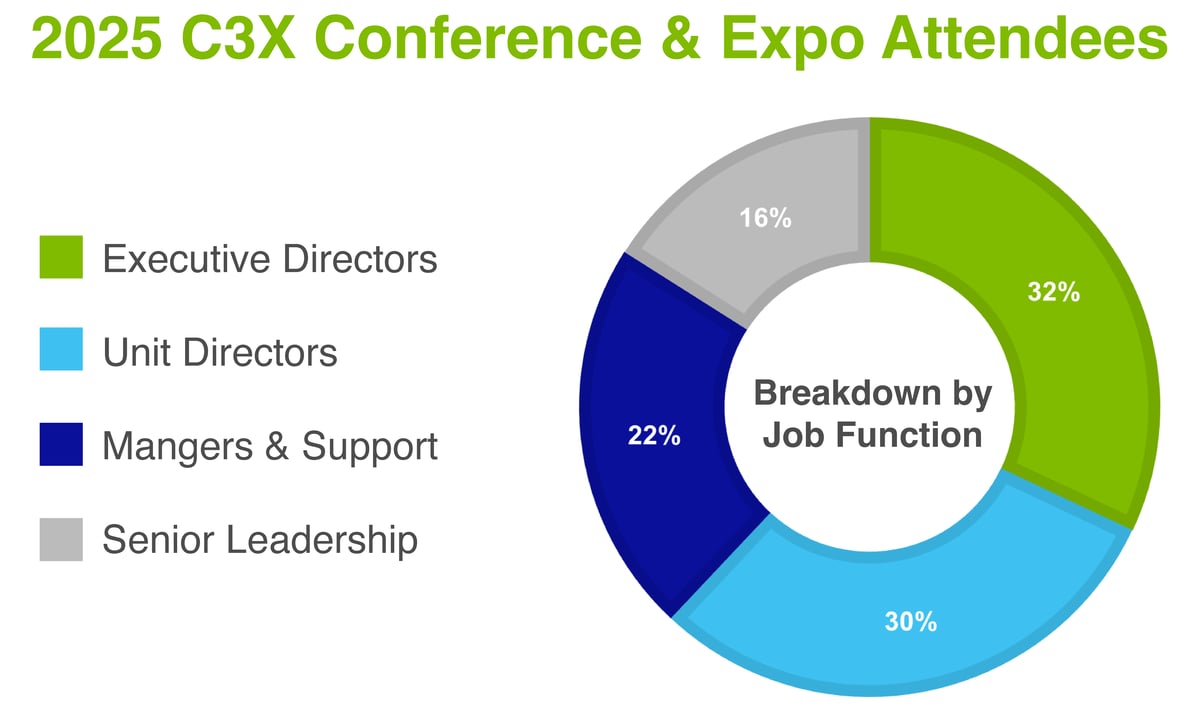
What's Included in Your 10x10 Booth

Premium Exhibit Space
- 8′ High Draped Backwall — Black
- 3′ High Draped Siderails — Black
- One (1) 6′ Draped Table — Black
- Two (2) Side Chairs
- One (1) Wastebasket
- One (1) 7″ × 44″ Identification Sign with Company Name & Booth Number
CARPET, INTERNET, AND ELECTRICAL ARE NOT INCLUDED.
(These may be ordered through the official decorator.)

Strategic Connections
- One (1) Full Conference Registration is included with each 10′ x 10′ booth.
- Two (2) Booth Staff Registrations are included per exhibiting company.
- Booth Staff may be upgraded to Full Conference registrations for $600 each.
Full Conference Registration Includes:
- Access to the Opening & Closing Receptions
- Access to Education & Keynote Sessions
- Breakfast and Lunch
Booth Staff Registration Includes:
- Access to the Expo Hall only
- Access to any meals served in the Expo Hall
- Does NOT include access to receptions, education sessions, or keynotes.
- To participate in these events, Booth Staff must upgrade to a Full Conference Registration ($600).
.png)
Brand Visibility
- Pre- and post-conference attendee lists (Attendees + Business Partners)
- Company listing on the C3X website and mobile app
Price per 10x10
Standard - $4,300
Premium - $4,700
Most Popular
Gold Sponsorship - Booth Add on
$2,750
- Two (2) additional booth personnel (with the option to upgrade booth staff to full conference registration for $600 each)
- Two (2) additional full conference registrations
- Post-conference digital marketing collateral distribution
- Scripted app push notifications sent by NACAS
- Company logo featured on event signage, mobile app, and conference website (with hyperlink)
- Company profile on the conference mobile app
- Acknowledgment during Opening Remarks
Silver Sponsorship - Booth Add on
$1,250
- One (1) additional booth personnel (with the option to upgrade booth staff to full conference registration for $600)
- One (1) additional full conference registration
- Company logo featured on event signage, mobile app, and conference website (with hyperlink)
- Company profile on the conference mobile app
- Acknowledgment during Opening Remarks
Programmatic Advertising (4 Available)
$1,600-$3,200
Programmatic advertising uses location and behavioral data to deliver highly targeted digital ads to the NACAS audience before, during, and after key moments of engagement. Utilizing retargeting and geofencing campaign together, you can strategically keep your brand in front of campus leaders and decision makers beyond the exhibit hall when they’re checking their favorite social sites or planning their next day of the event. By extending your visibility, you increase the likelihood of meaningful engagement with the NACAS community!
C3X VALUE CALCULATOR
See how the sourcing, education, networking, and leadership opportunities at C3X can translate into measurable value for you and your institution.
Your inputs
Build your C3X value snapshot
Use a few quick assumptions to estimate the sourcing, education, networking, and leadership value of attending.
Your results
Here’s your estimated C3X value
A fast estimate of the sourcing efficiency and professional development value you could gain from one event.
Hours Saved
0
Research Cost Saved
$0
Meetings Consolidated
0
Procurement Opportunities
0
Education Value
$0
Networking Value
$0
Leadership Value
$0
Total Estimated C3X Value
$0
Enter your estimates and click the button to see your projected C3X value.
Ready to take the next step?
Turn your estimated value into a real C3X plan
If this snapshot reflects the kind of time savings, sourcing efficiency, and development value you’re looking for, register now to start building your C3X experience.
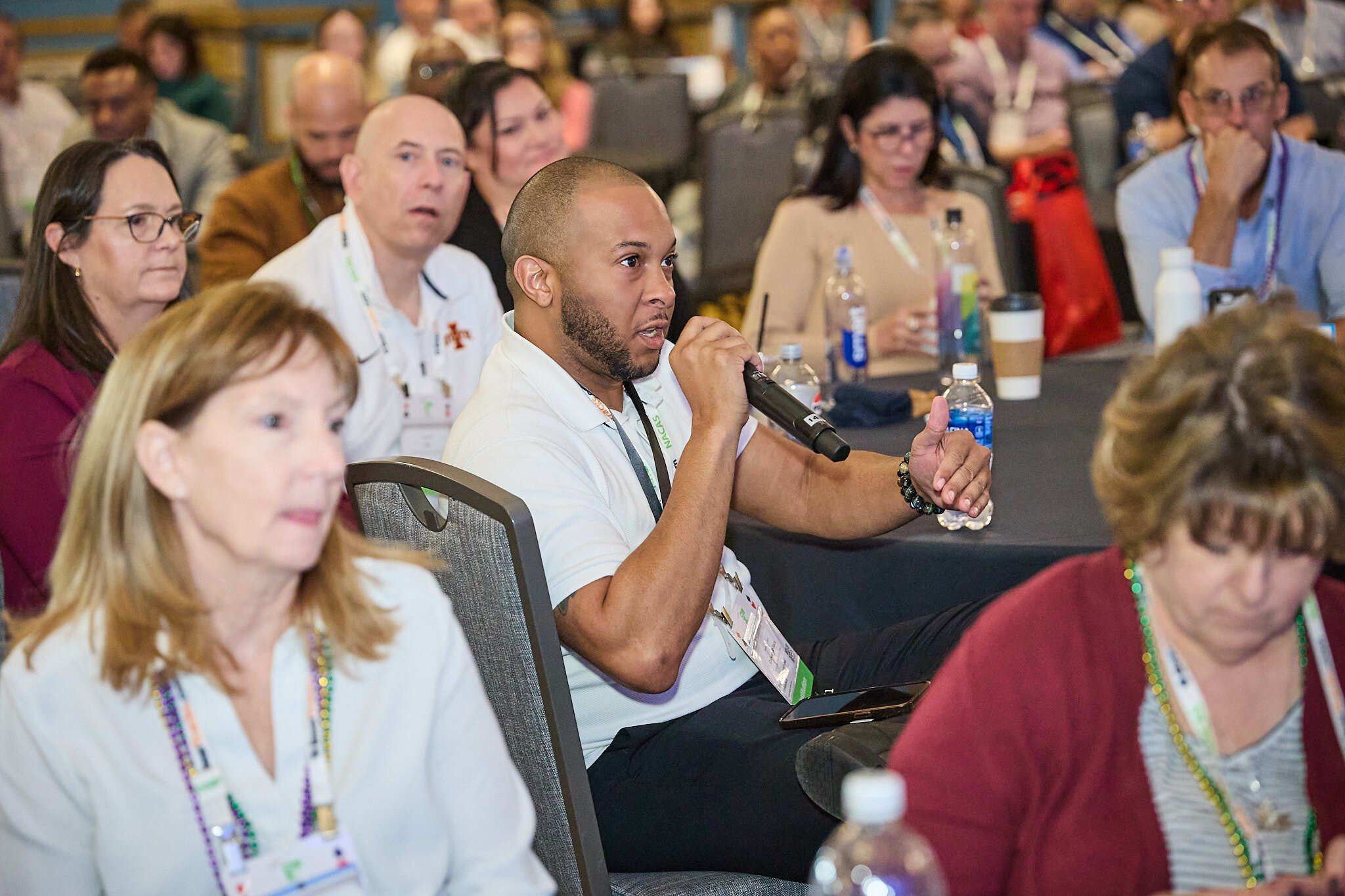
Business Case For Attending
The C3X Annual Conference & Expo offers a comprehensive program designed to support professional growth and operational excellence, including:
- 50+ educational sessions covering key areas such as dining, retail, housing, facilities, finance, and student engagement
- An expansive expo hall showcasing innovative products, services, and solutions from industry-leading partners (170+ exhibitors)
- Networking opportunities with peers from 200+ institutions across the country to share insights and best practices
- Interactive discussions focused on addressing current challenges and identifying future opportunities in auxiliary services
This event has passed!
NACAS 2026 C3X Annual Conference Starts In:
00
days
00
hours
00
minutes
00
seconds
A more subdued subheading
Thank You to Our 2024 C3X Sponsors
Founder

Diamond

.jpg?width=1220&height=510&name=Chartwells%202024%20-%20CHE%20Logo__Full%20Color%20(003).jpg)
Platinum


Gold



.png?width=3300&height=2550&name=UPS_21_shield_2C_K_4C%20(1).png)
Silver















Future NACAS C3X Dates & Locations
2027 C3X Annual Conference & Expo
National Harbor, MD- October 31-Nov. 3, 2027
2028 C3X Annual Conference & Expo
Grapevine, TX - October 22-25, 2028
2029 C3X Annual Conference & Expo
Denver, CO - October 07-10, 2029